
Your brain is begging for you to ‘touch grass’
The internet turned it into an insult. But our brains are craving for some green.
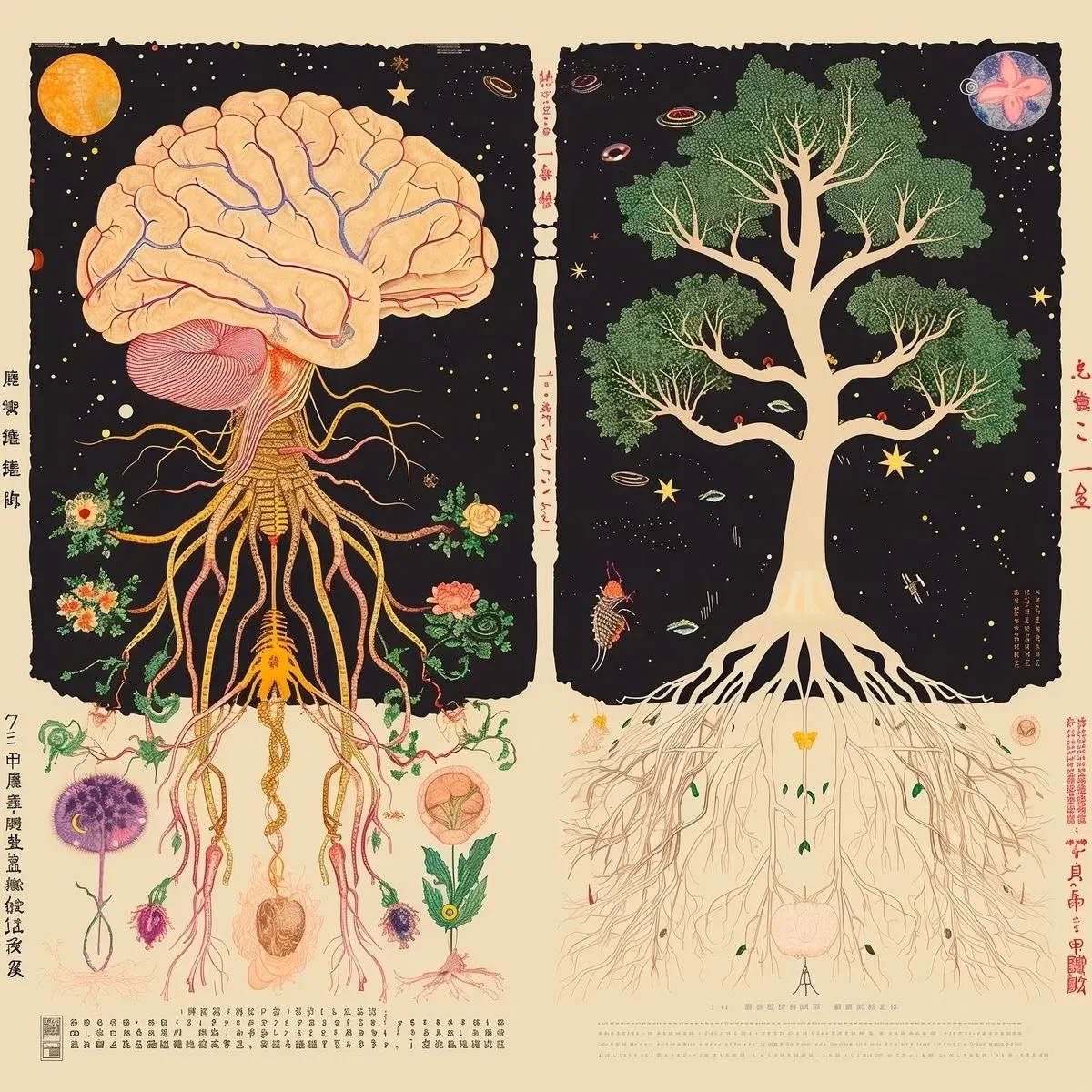
Sourced from Pinterest
At some point, go touch grass, became the perfect thing to say to someone who desperately needed to log off social media for a couple hours. Days even.
Maybe they’ve been arguing with strangers/bots in a comment section. Maybe they spent hours honed in on some celebrity breakup. Maybe they’re genuienly getting angry about something they saw on TikTok. Please. Go outside and touch some grass.
It’s supposed to be an insult. But lately I’ve been thinking… maybe it’s actually pretty solid psyche advice. Because when was the last time you went outside without actually doing anything? When was the last time you actually let your brain exist for a few minutes without giving it something to consume?
We can fight it all we want. We can sit in our little chairs at our little desks on our little laptops all we want, and tell everyone how busy we are — or we don’t have time for a walk outside or don’t have time to go get some fresh air... but our brains are saying something else.
There’s a theory called biophilia — the idea that humans have an innate pull toward the natural world. Maybe that explains why certain things seem to catch us almost universally: sunsets, trees, water, the colors and patterns we find outside.
Source: Pinterest
The more technology appeared in our lives, the more human interactions with nature started to decrease. We know this. This separation has caused a downward spiral for human health. ***Research has been done showing people who spent even two hours per week interacting with nature reported ‘greater satisfaction and better health’ than people who spent less time in a natural environment.
We’re really good at spending time indoors. But it’s not really good for our soul.
Without even taking a second thought to it, we’re able to go an entire day without spending meaningful time outside.
We wake up inside. Drink coffee inside. Work inside. Eat inside. Exercise inside. Drive somewhere inside a metal container. Go inside another building. Drive home inside. Sit on the couch inside. Watch Netflix inside. Doomscroll inside. Go to bed. Inside.
Repeat.
We’ve basically designed modern life so that interacting with the natural world is optional. And for most people, they’re very comfortable. They have their A/C, artificial lighting…Amazon Prime now has grocery delivery…everyone has their streaming services. Phones are also capable of entertaining us indefinitely. We don’t have a chance to feel boredom anymore. There is always something to look at. Someone to answer. Something for our brain to munch on.
And yet somehow, despite having more entertainment and convenience than any generation before us, a lot of us feel completely mentally fried. Maybe those two things aren’t unrelated.
Our brains crave nature.
Nature supports brain functions — attention, mood, cognition. But did you know that nature can also help our constantlydirected attention a chance to recover?
Environmental neuroscience studies how our surroundings influence the brain. In Japan, they have this thing called shinrin-yoku, or “forest bathing,” the act of being in nature, and connecting with it through our multisensory system of sight, hearing, taste, smell and touch. Studies have linked forest exposure with lower cortisol levels, changes in autonomic measures, improvements in mood, and changes in measures of immune function.
Psychologists Rachel and Stephen Kaplan developed something called Attention Restoration Theory (ART). The basic idea behind it is that our capacity for directed attention is limited. Spend enough time forcing yourself to focus, filter distractions and bounce between demands, and eventually that system gets tired.
Think about it. Our everyday lives are on constant demand for attention — an Instagram notification, answering an email, remembering to finish that thing at work, picking up your kids, remembering to grab something for dinner…
Our attention never gets turned off. But in nature, something else happens. Our attention is slower. Our focus is sharper. We are calmer.
A cloud floating, water flowing, birds chirping…these types of sounds attract us without demanding that we concentrate on them. It’s not a force.
It’s gentle. This is what we call ‘soft fascination’. It’s interesting enough to engage us, but not forcing us to do so, to the point it’s heavy on our minds. In an environment like that, our brain and attention span gets a chance to recover in peace.
Soft fascination…I love that phrase. Because it describes something we’ve almost forgotten how to experience. Being interested without being stimulated.
Researchers have begun to question whether some of nature’s restorative qualities come from the visual geometry we lack in our modern society.
We don’t live in some sketched out, funky, cartoon world. Our environment is ruled by straight lines, sharp edges, and your standard geometric shapes. But in nature, you have more curves, irregularity, variation, and complex patterns. Though, nature does have repeating patterns. It’s not all one big blemish of colors. The branching of a tree, the veins of a leaf, the irregular edge of a coastline, what are called as “fractal” patterns.
Some researchers think those fractal patterns may be part of the reason natural environments feel different to our brains; even when we’re not consciously noticing the patterns themselves.
To put it into perspective — when you pick up your phone, sometimes twenty minutes go by. Sometimes an hour. Then what happens? Do you feel better afterward? Because I don’t. I feel full. Not satisfied-full. Just full. Like my brain ate a whole bag of chips. I had a bunch of stimulation, but nothing nourishing happened.
And I think that’s part of what makes being outside feel so alive.
Outside doesn’t constantly introduce something new. There isn’t another video waiting underneath the tree. There isn’t a comment section to read through after the sunset. You don’t need to form an opinion about the ocean or the palm tree. You can just simply look at it. In silence.
Remember when boredom used to happen naturally?
But it wasn’t really boredom. It was just an empty space in time before the main event. Standing in line…sitting in a waiting room…waiting for your friend to pick you up…walking to the store…we were just there. Maybe our thoughts took us places. Maybe we noticed something on the route. Maybe our mind wandered for a couple minutes. But now, we fill almost every single tiny gap with stimulation.
The second nothing is happening, the phone comes out. And I wonder what that means for our brains? Is mind-wandering a waste of time now? Because I know when my mind drifts, it goes down memory lane. It gets creative. It plans new experiences, or processes old moments. Nature happens to be really good at creating that kind of space for me.
You don’t need to become an outdoors person to clear your mind from the clutter.
This is where articles like this usually start getting unrealistic. They tell you to wake up at 5 a.m. Go on a run for 3 miles. Start gardening. Become one with the earth. Your average person isn’t doing that. You don’t need to hike through Montana and delete your social media to become more grounded.
You just have to do what you normally do — outside. Drink your coffee in the sun. Take a longer route to work (if you walk). Sit outside with your kids instead of taking your phone out while they play. Walk your dog withoutAirpods. Go take your lunch break under a tree. Hit the beach without taking a video of the waves hitting the shore. Just look at the damn sky. All these small things are what will start making the world feel alive around you again.
We’ve made nature feel like an activity.
Going outside has become something we now schedule. Meanwhile, nature used to simply be the background of human life. Now it’s an event we do at the farmer’s market on a Saturday or Sunday.
And I think that’s really f*ckin’ strange.
Maybe our brains aren’t necessarily asking for some massive lifestyle overhaul. Maybe they’re asking for little moments of an environment they recognize. An environment our ancestors have been living in since the beginning of time.
Sunlight. Wind. Water. Trees. Space. Silence. Things that don’t beep. Things that don’t need passwords. Things that don’t care whether we respond.
So, yes. Go touch some damn grass.
Not because you’re losing an argument online. Not because you’re too obsessed with getting more engagement. Not because some stranger in a comment section told you to.
Do it because your brain has spent all day filtering notifications, ads, convos, traffic, screens, emails, videos and information. Give it something that doesn’t require anything from it.
Go outside.
Leave your phone in your pocket. Notice whatever is there. You don’t need to optimize it. You don’t need to track your steps. You don’t need to turn it into a morning routine or your next Reel. You don’t even need to take a picture.
Just go touch the grass. Your brain might remember what to do from there.
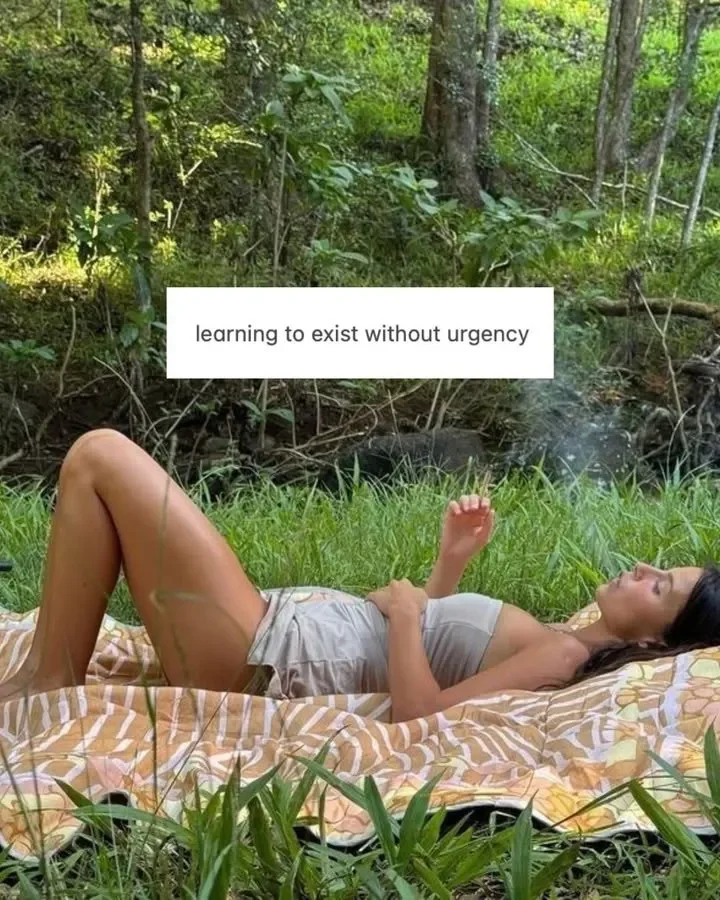
Source: Pinterest
***2019 White et al. study, Spending at least 120 minutes a week in nature. The study analyzed nearly 20,000 people and found that people reporting at least 120 minutes of nature contact per week were more likely to report good health and high well-being.
