
Swallow it for the boss, unleash it on your spouse. Sound familiar?
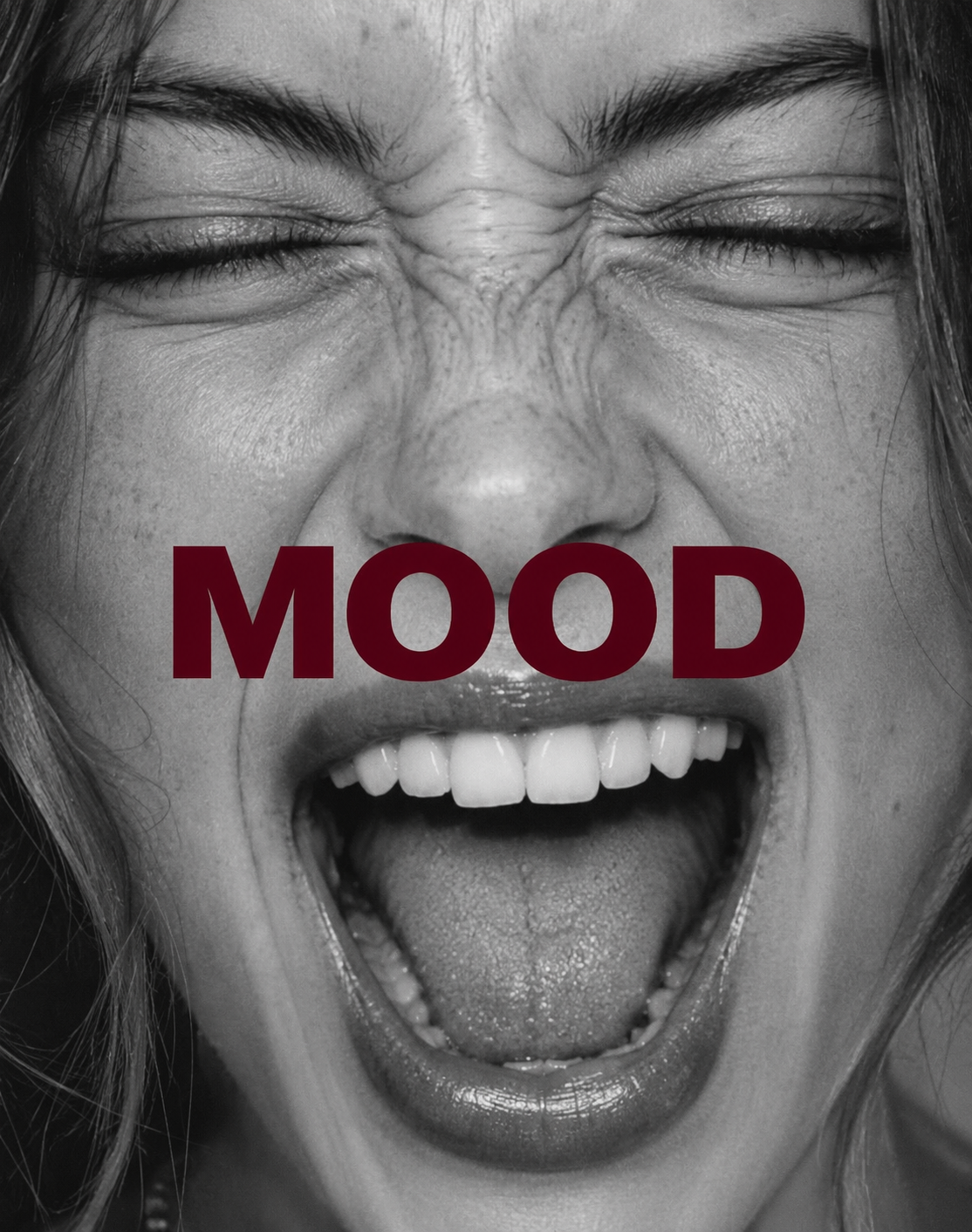
source: tatiana vitas
My sister handed back my brother’s car keys and said, “So…there’s a scratch.” I walked outside with them. It ran the length of the passenger door, pale and deep. You could feel it with your fingernail.
“It’s fine,” he said.
I knew he wasn’t fine. He said those words the way he said them his whole life: automatically, with a half smile, half disappointed, before he even allowed his feelings to even finish taking over him.
Let’s rewind back to the days on the playground. We’re taught from as early as two to ‘play nice with other kids’. Then we get a little older and it turns into ‘be polite’, or ‘stay calm’. Then we’re teenagers and it’s ‘control your emotions’.
Then the phrase of ‘it’s fine’ enters our vocabulary. Your date cancels? It’s fine. Got passed over as lead for a project? It’s fine. Someone cut you in line at the grocery store? It’s fine. Your sister borrowed your car and scratched the paint. It’s fine.
We learn to suppress our feelings very early. By the time we’re grown, it becomes a personality: good people don’t make a scene. Good people let things go. They forgive fast. They stay positive and assume the best. You could stitch this stuff on a throw pillow.
Most people are raised to believe that being a good person meant being agreeable. It keeps this sense of ease — sense of tolerance — within a society. Smile, say no worries, and swallow the thing that rises in your throat. But that persona gets old real quick. Staying silent because my feelings made other people uncomfortable was never on my agenda.
Standing in that driveway, with my sister waiting for my brother to be the bigger person, I noticed something. The thing in his throat hadn’t gone anywhere. He’d just stopped letting it grow.
The emotions we were taught to suppress, like anger and guilt, are often quite useful, but — and there’s always a but — they’re only useful in the right situation. The habit of regurgitating I’m fine isn’t maturity. It’s smashing down on our gut instinct that’s trying to say something.
I think it’s fair to say that society has preached repeatedly that certain emotions are good — gratitude, calm, joy.
And some are holes to be patched — anger, envy, guilt, anxiety. Tons of industries run on this logic. Stay positive. Choose peace. Release what doesn’t serve you. Blah, blah, blah. You know the mantras.
Psychologist Todd Kashdan spent years arguing that this is too simple. In The Upside of Your Dark Side, the claim is that no emotion or personality trait is good or bad on its own. We should be thinking of them as tools. The real question is which tool do you need to do the job, and how hard to swing it. Someone who only has pleasant tools in their shed can be fine in their life, right up until the situation calls for a different one. Then she’s standing there with a feather duster at a knife fight.
Kashdan calls the goal wholeness: access to your entire toolkit, not just the parts that photograph well. I call it the first time a psychologist has given us permission to stop apologizing for our resting bitch face.
But permission is a slippery word, so let’s look at what the research actually says.
It can’t be a coincidence that the emotions were taught to suppress are usually the ones doing the most honest work.
Take anger.
I perform better in confrontation when I’m angry or riled up. I don’t mean the screaming type of angry. I’m talking about the angry that gets your blood hot. The angry that gives your purpose a meaning — something to fight for. Anger works in a confrontational situation.
But in something that needs you to be cooperative, anger is not the tool to reach for in your toolbox. Anger is information. It tells you something — a boundary — got crossed. It hands you that little nerve you need to actually go and do something about it. The person who feels angry and then swallows it to mouth the words it’s fine doesn’t make them more enlightened or mature. The anger is still there, they just didn’t act on it appropriately.
Oh, that wonderful word forgiveness.
Society loves shoving it down our throats. If you can forgive, you’ve grown as a person. If you can forgive, you’ll be a better person. Forgiveness might be the most praised thing a person can do. It’s also the one I’ve watched people use, and then get rolled on because they became pushovers.
Psychologist James McNulty followed newlywed couples for four years. He measured how forgiving each spouse said they were, and how much psychological aggression (insults, spiteful comments) and physical aggression (pushing, grabbing, hitting) their partner showed toward them.
If you were a very forgiving spouse, your partner’s aggressive behavior toward you stayed about the same over the four years. It didn’t get better. If you were less forgiving, your partner’s aggressive behavior toward you went down.
McNulty isn’t arguing that forgiveness is bad. But he is showing there’s a pattern here. If you’re constantly telling someone who wronged you, oh, it’s fine, or if you’re practicing a lifestyle of no bad vibes, what it’s actually translating to is your forgiveness is backfiring. Mcnulty’s point isn’t never forgive. It’s that forgiving right away and automatically, with no consequence, no conversation, no awkwardness can backfire on you.
Just because you forgive, doesn’t mean the other person’s ‘bad behavior’ stops. If you were to actually stay upset for a bit, let them know it wasn’t okay, your partner can actually feel some discomfort of having hurt you, and that builds more of a reason to not do that behavior again.
Guilt gets a bad rap. If I had to pick the emotion we’ve most wrongly filed under ‘toxic,’ it’s probably guilt.
A review by Roy Baumeister treated guilt as a social emotion that happens between people as much as it does inside them. It shows up most in close relationships, and one of its jobs is pushing us to treat our partners well, avoid doing them dirty, and make amends if and when we do.
People who’ve spent time in a criminology class learn fast that the absence of remorse is a red flag. The man who cheats and then sleeps like a baby is a bigger problem than the one who lies awake replaying it.
But there’s a complication, and Baumeister’s research discusses it: making someone feel guilty is an effective way to change a partner’s behavior. Same emotion, but two different uses. One person treats it as a conscience. Another treats it as a tool — preferably a crowbar.
Point your anger towards the person who deserves it.
The anger you feel at an unfair boss or your reckless sister is a tool. It’s warranted. But anger at your boyfriend because your day didn’t go well is uncalled for.
Most of us don’t have a shortage of dark emotions. We have a problem aiming them at the proper target. We point them towards the people closest to us because it’s safe. Yet at the same time, we’re capable of swallowing them around the people who deserve them. The coworker who took the credit gets our smile. But our partner who forgot to buy the basil gets a whole speech.
I never said pulling anger out of the toolbox is something enjoyable, or a tool we should be using at any given moment. Sure, sometimes it shows up hot and unreasonable — usually at the worst possible time. But I’ve started treating my emotions the way I’d treat any alarm going off inside of me: not as proof that something is wrong with me, and not as an order to go wild and burn the house down. I treat my ‘dark emotions’ as a little sound that means check yourself. I allow myself to feel those emotions. I don’t suppress them. But I am cautious of who I’m about to point them at.
