
I used to be a brainwashed New Yorker
Published in Humans and Only Humans
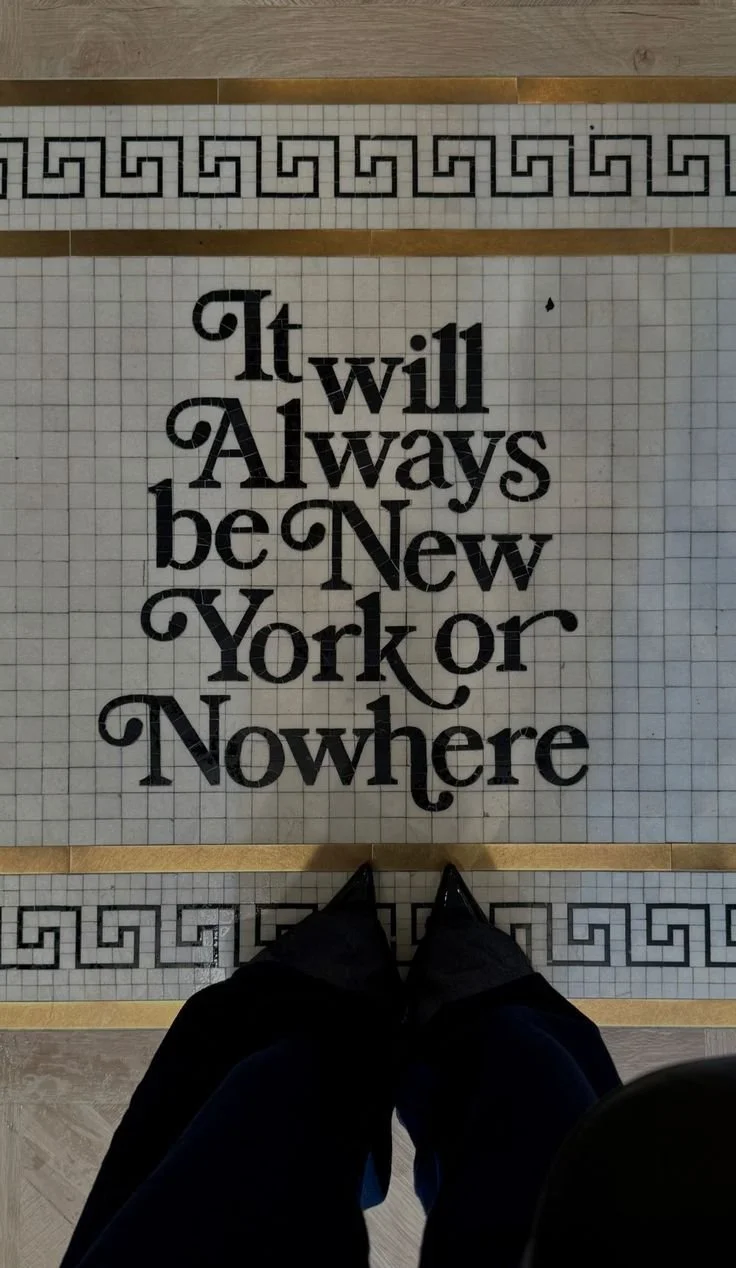
‘It’s New York or Nowhere’
It was sunny day in Delray Beach, Florida. I was meeting my family — visiting from New York — to lay out by the beach with them. They were posted up next to this older couple, probably mid 50s, who had their music blasting from some 90's speaker. All the best old-school jams, straight off a New York block party. We placed bets: Harlem? The Bronx? Ozone Park? Brooklyn? But the artists didn’t match any borough we could pin down. Eventually, we had to ask where they were from.
“Lower East Side baby.”
They were only here for the weekend.
“But we’d neva live here. It’s New York or nowhere! We ain’t neva gonna be nothin’ but New Yawkahz.”
No exaggeration. That’s word for word what the wife said to us, in this raspy, smoked-her-whole-life accent.
Listen, I grew up in NY. I know how it is. I know how prideful people are. I know each borough is its own world once you cross that bridge — the slang, how you say hi, when you don’t , which ethnicities run which corner stores block to block. I get it. People from the Bronx don’t want to be confused with Westchester. And me, from Queens — don’t ever compare me to a chick from Brooklyn. I get it…
But here’s what I’ve noticed: ask a certain type of New Yorker why they’ve never left, and you don’t get a simple answer. You get a speech. The amount of pride in their tone when they say “it’s the greatest city in the world” makes me want to vomit now. “Everywhere else is so slow. Nothing moves like in New York.” And the best one — the one we’ve all heard a thousand times — “if you can make it here, you can make it anywhere.”
But the thing about a real New Yorker, though — they never actually go anywhere else to try. So what is this logic they survive on? Some kind of coping mechanism to justify never leaving?
Around 28, I moved down South. I slowly evolved out of that NY mentality, out of needing ‘from NY’ stamped on my forehead. People in my new neighborhood clocked my accent right away. I thought I was cool. Yeah, I’m from New York — like I had some type of street-cred that made me better than everyone else down here. It didn’t give me anything but a headache. People’s expressions changed once they learned I actually live here now. I annoyed them. They wanted no part of anyone from New York. And I don’t blame them. The mindset of the Northeast and the mindset in the South are world’s apart, and the thing about New Yorkers is — wherever they go, they bring that same NY ideology with them. They don’t adapt. Most of the time, they don’t even realize they’re doing it.
When I moved to Miami I had a one-up on the hustle. I ran circles around the staff at work; management started asking me for tips to help the rest of the team hit their numbers. Because of my sales, they posted a weekly sales sheet in the back room of the top earners. My name was always at the top. Rather than it motivating anyone, it ended up just outcasting me.
After a while I stopped working there. I’d brought a NY work ethic into a state built on lounging. NY restaurants run on urgency. Everyone moves fast because the tips depend on the table turn. Down here, it was chaos without a purpose — nobody could tell me if we were working or just waiting out the shift. Being fast made people suspicious, not impressed.
I would think about that for a while after: back in NY, that same hustle was the whole point. The faster you were, the more money you made. Down here, nobody was buying it, and I couldn’t figure out if that made me better (they just couldn’t see it yet) or obnoxious.
That’s when ‘New York or nowhere’ started sounding different to me. Less like a statement about New York, and more directed at the person saying it. No one who’s actually content argues their choices that hard. You don’t hear people who love a quiet small town life corner an outsider to insist they’re missing out. I’ve never met one person in Florida who’s told a New Yorker you have to move here. People who are content don’t need to sell it. I know because I used to be the one selling it, and I couldn’t tell you why until I stopped.
Defensiveness usually means some part of what you’re proving isn’t actually working. You’re hyping something up, not describing something true.
Psychologists have a name for this type of talk: cognitive dissonance. When you’ve given up a lot for something, like money, sleep, a relationship, your twenties — you need that something to have been worth it. Our minds don’t sit well with mediocre payouts, so our minds inflate the value of what we still have left. That $4,000-a-month-1-bedroom isn’t a bad deal — you have a sick view. That price point is what New York has tricked people to pay, because they genuinely believe New York is the only place where things happen. That hour long commute from Queens to Manhattan isn’t terrible — it’s just the toll for a job on that hamster wheel. Admitting otherwise means admitting a mistake, and I can relate, because I spent a good portion of my twenties convincing myself the same type of story about my own hours and my own sacrifices.
If you’re not exhausted, are you even trying?
New York is the epitome of a fast, status-saturated city where living there becomes your identity. Congratulations, you’ve been entered into the rat race. And just like all your friends, your calendar is filled up on purpose; it’s proof you’re all some ambitious-go-getters. God forbid you get some free time.
That’s where that rat race mentality stops describing a city and starts entangling itself with your personality. “I don’t have time” turns into a status symbol instead of a complaint. Slow gets read as lazy or failed, rather than simply just having a different set of priorities. In New York, the busier you are, the more everyone accepts you. You’re all speaking the same language: work and money. I spoke it fluently. It’s the same language I brought with me to that restaurant in Miami, not realizing nobody else in the room was even trying to learn it.
Now take that person and drop them somewhere the signal doesn’t register — a place where no one really cares you were up at 6a.m for the gym before jumping on four Zoom calls. Something uncomfortable happens. The identity that felt like ambition starts looking a lot like habit. That’s a tough pill to swallow. So for people like that, it’s easier to call the new place slow than to admit they’d been living life too fast. I called the South slow for about a year before I let myself call it something else: quiet.
Social proof doesn’t need to be true. It just needs enough people repeating it with confidence.
Live somewhere long enough, surrounded by people who chose the same trade-offs you did, and you’ll start hearing the same stories thrown back at you constantly: this is where you hustle, the city that never sleeps, this is where dreams come true, nothing happens anywhere else. This is also how someone ends up believing a filthy subway system running a decade behind schedule is the pinnacle of urban efficiency, or that a city with a well-documented cost-of-living crisis is the only rational place to build a life. Not because the facts support it, but because everyone in earshot has agreed to treat the story as obvious.
Hmm, so…brainwashed?
‘Brainwashed’ is probably the wrong word. Nobody’s holding anyone hostage. What’s actually happening is more basic and more universal: people create belief systems that make their circumstances feel chosen rather than accidental, and meaningful rather than empty. New York just so happens to be a really visible, loud place; so when New Yorkers do this ordinary self-justifying thing, everyone notices and it becomes a stereotype (New York or nowhere).
The instinct isn’t limited to New Yorkers either. Swap the city for a startup, a relationship, a religion, a diet — wherever someone’s paid a real cost, you’ll usually find a belief system quietly engineered to make that cost look like wisdom.
Which raises the more interesting question: not whether New York is actually the center of the universe, but why so many of us, in whatever city, career, or life we’ve committed to, need to believe we picked the only place worth being.
I still think about that Lower East Side couple on the beach sometimes. Two days in Florida, sun on their faces, and still insisting there was nowhere else worth being. I used to think that was pride. Now I think it might’ve just been fear dressed up in a really good accent.
