
“If they wanted to, they would”
Published in Human. Not Innocent
Why we’d rather decide than ask.
A friend of mine ended a relationship over a text he didn’t answer for six hours. Didn’t end it because of the fight before it. Not the pattern behind it. Because of six hours of silence.
She’d sent him a long message about wanting to move in together. By hour four, she’d already decided what his silence meant. By hour six, she told me, calm as ever: if he wanted to, he would’ve answered by now.
She didn’t seem upset. She sounded more relieved if anything. Like she’d finally gotten the answer to the question she’d been stuck on for months.
He did text her back though — at hour seven. Work emergency and my phone died. But it didn’t matter to her. She’d already made up her mind and she wasn’t about to let a dead phone take that clarity away from her.
I don’t think she was wrong to leave. I think she was wrong about why she left.
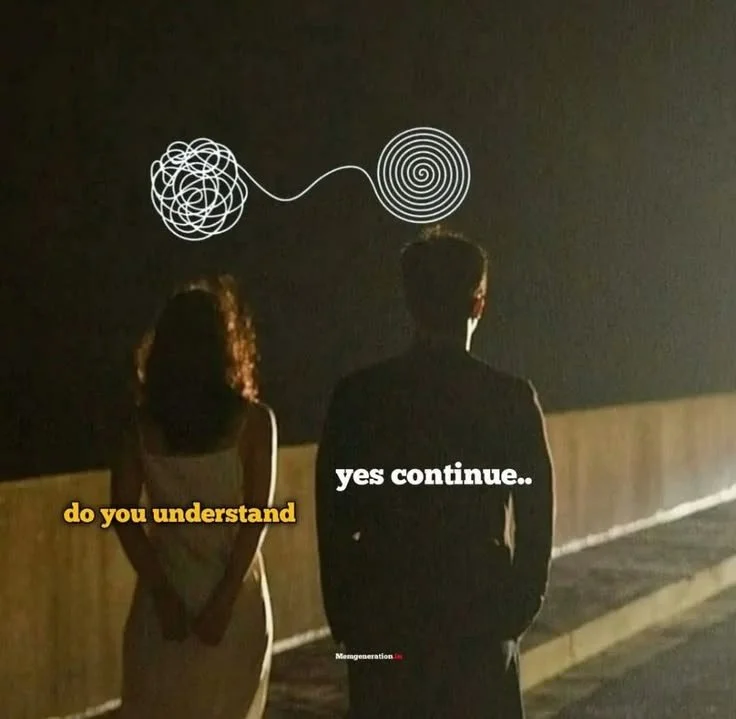
If they wanted to, they would.
The phrase is everywhere — captions, comments, therapy language that escaped the confines of an office and started running loose online. It gained momentum because it removes the hardest part of a relationship — sitting in that grey area about another person’s feelings; and replaces it with a yes-or-no you can act on ASAP.
The phrase isn’t wrong all the time. Just sometimes it’s right. And that’s why it’s a problem. Something that’s true often enough starts to feel like a universal law instead of a rough heuristic. Especially when you want it so badly to be one.
What the phrase is really offering is an escape from not knowing. For most people, that limbo, that unknown landscape is brutal. Not knowing if someone loves you enough, or if they’re scared, or if their silence means something deeper or nothing at all — that’s one of the worst feelings there is.
My friend never said the six hours of silence was eating her up.
She decided, alone, what it meant. Then she got to leave without asking him directly, without risking an answer she didn’t want.
Self-respect and self-protection can look identical from the outside. The phrase doesn’t care which one you’re practicing.
When someone ends things and recites “if they wanted to, they would,” it sounds like some clean, decisive clarity. It’s the line that gets the applause in a group chat. But technically, clarity and avoidance can produce that same mantra.
From the outside, these two things look identical.
There’s a version to a break-up where this mantra stands true. You knew what you needed from a partner. You said it, clearly, more than once to him. He heard you and didn’t care enough to change. Now, you’re the one packing your toothbrush, but with full information, and the if they wanted to, they would, is an accurate summary of what happened. That’s not a rare version. Happens all the time.
But…there is a second version, where you don’t actually say what you need. So then there’s a gap — a miscommunication — a slow reply, a thing they ‘should’ve known to do’. And it hurt you when the opportunity was missed. Instead of telling your partner what hurt you, and giving him the chance to respond to it, you already pieced together a verdict privately. Then you recite the mantra to yourself, maybe loud in your car, maybe to the group chat, maybe to yourself in the mirror, and you feel like a goddess channeling your inner warrior.
Both versions might sound the same. If they wanted to, they would. But only one of them is an honest take about what really went down.
Why version #2 tempts us
Whoever is the one to ask: what’s going on with us or why didn’t you text me back, is usually opening a Pandora’s box of adjectives — vulnerable, naive, maybe a little weak. If you go with the story in version one where you do officially ask the questions, the reply might be a very basic reply back. My phone died. I had a bad day. I wanted some time alone. Something ordinary and undramatic. Something boring that can happen to anyone.
But if it’s boring, you’re still stuck in the mess of your emotions. You have no clean exit, no story, it’s just two people who still have to figure out how to be better at communicating.
Now the tempting of version two — if you don’t ask the questions, and take it upon yourself to decide what the silence or distance meant, you literally skip that risk of a basic reply altogether. You get all the relief of an answer you concocted in your own head, without ever giving yourself the chance to hear the real reason.
You got rid of that vulnerability. You got rid of that raw conversation of ‘I didn’t realize you needed that from me.’ You erased the possibility that this entire situation was fixable — only — if only — you’d said something.
Deciding has now become safer than asking. It’s an easier story to live in than the one where two people are actually honest with their feelings.
I’m not saying tolerate people who never show up. Some people really don’t want it bad enough. That’s why the phrase exists in the first place.
But a rule that’s right usually isn’t the same as a rule that’s true.
People aren’t numbers and math. Wanting something isn’t something we can turn on and off when we feel like ignoring it. It’s a craving inside of us. Same with fear, or exhaustion, or a phone dying in a parking lot at exactly the wrong hour.
At hour seven, my friend found out that the silence meant nothing at all. But she left anyway. And I think some part of her already knew, by then, that the six hours had never really been about him.
The comfort in the rule is worth being honest about. Especially at hour six. Especially when the easier story is also the one where you never have to ask.
