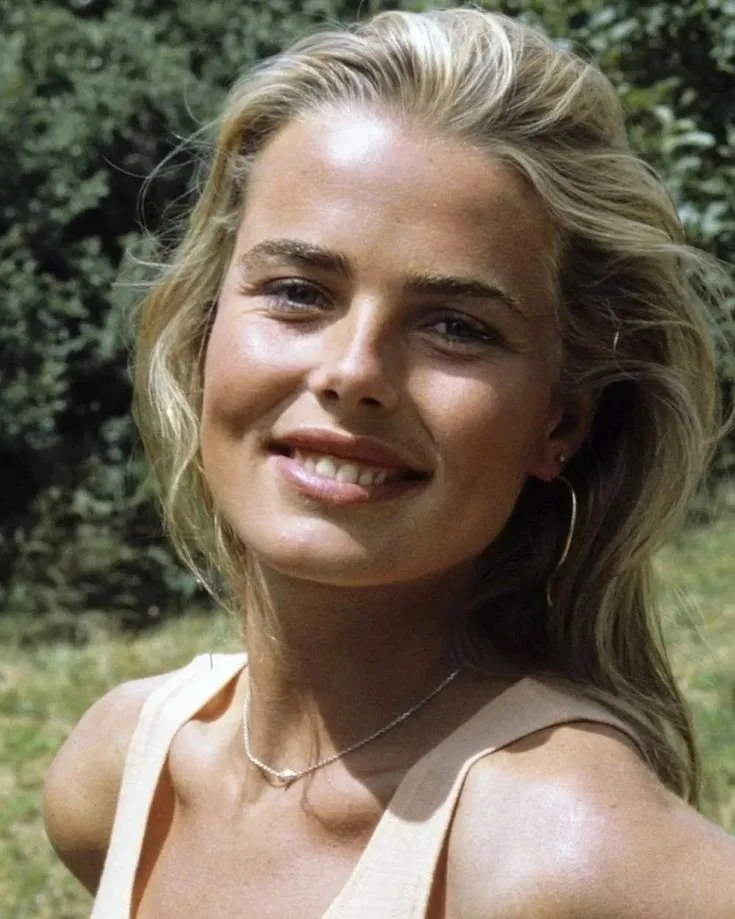
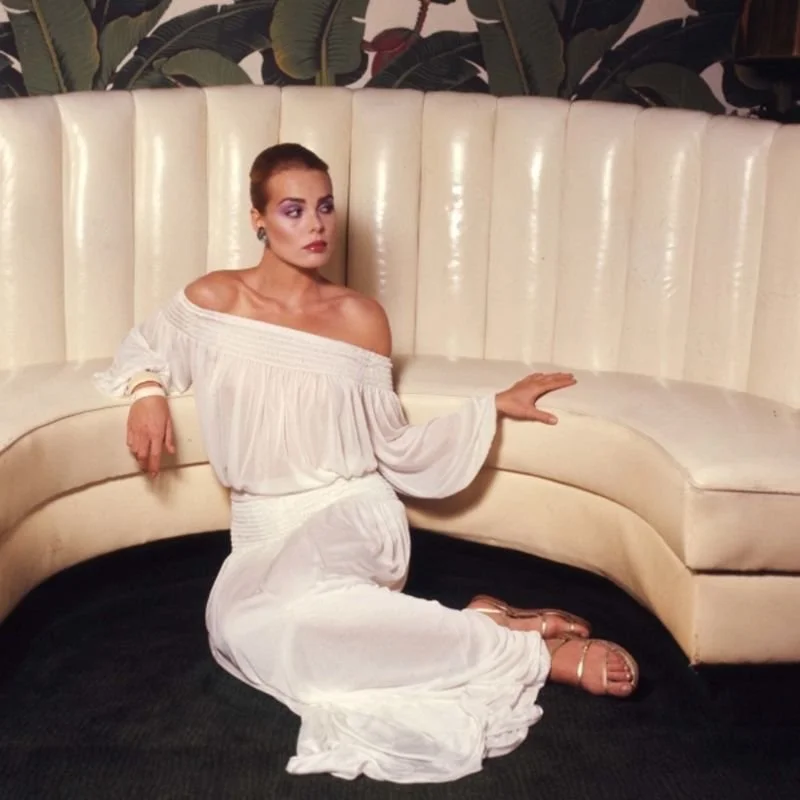
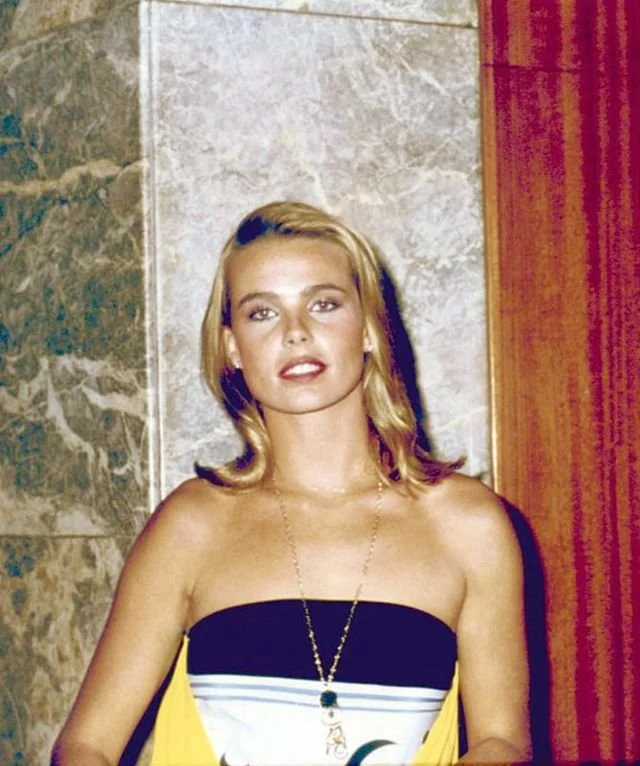
Margaux Hemingway was living your Instagram feed in '75. And it killed her.
Published in Psyche
Long before the curated life was old money, a Hemingway was dying inside of it.
A true story of how mental illness affected generations.

Margaux Hemingway — Source: Pinterest
A ‘soft girl era’ is trending across Pinterest and Instagram, a minimal aesthetics filled with photos of your most simplest moments; a morning latte, a phony ‘candid’ photo, a psychology book intentionally placed on your sofa. Intimate aspects of life that were once kept private are now shared with the world. But this trend isn’t new. Before supermodels and their lavish lifestyles we see today, there was Margaux Hemingway—the striking ‘face’ of the ‘70s generation when it came to fashion and modeling. Her intimidating and mysterious aura captivated women globally. The media turned her into the muse you aspired to be.
But we know not everything that glitters is gold. Underneath the surface of her photos lies a deeper story. Unfortunately, hers does not have a happy ending. Most famous celebrities face public scrutiny as their tragic realities are laid bare for the public. Hemingway fell victim to not only the patterns in her family tree, but also the media that swallowed her whole.
Margaux’s World
From Vogue to international magazines, Margaux’s face was plastered everywhere. Her first million-dollar modeling contract with Faberge’s fragrances broke records. She was recognized worldwide before she even hit 21 years old. From the outside looking in, she had the life that every girl wanted.
Despite meeting all these big names through her modeling career, she never felt a connection to the ‘glamorous’ lifestyle she was entangled with. Even during the peak of her career, she still claimed to be that simple girl from Idaho rather than adopting the label of supermodel— a term that was relatively new for the ‘70s.
“Becoming a celebrity felt like being caught in the eye of a hurricane. Suddenly, I became an international cover girl. Everyone was fascinated by my Hemingway persona. […] It may sound glamorous, and it was. I was enjoying myself immensely. But I was also incredibly naive when I entered the scene. I genuinely believed that people appreciated me for who I was — my humor and positive traits. I never anticipated encountering so many opportunistic individuals.”
Patterns of Mental Illness
The famous Hemingway name has always carried more than literary weight. Underneath the awards, and the safari photos, and the six-toed cats, runs a much older thread of depression, alcoholism, illness, and suicide— connected through generation after generation like something nobody bothered to deal with from the very first time it happened.
Margaux grandfather was the Ernest Hemingway—a Pulitzer- and Nobel Prize-winning American novelist and short-story writer. In 1961, Ernest shot himself with his favorite double-barreled shotgun, in his home in Idaho’s Sawtooth mountains, on a date that would turn out to mean something twice: exactly 35 years later, to the day, the world would learn his granddaughter Margaux was dead too.
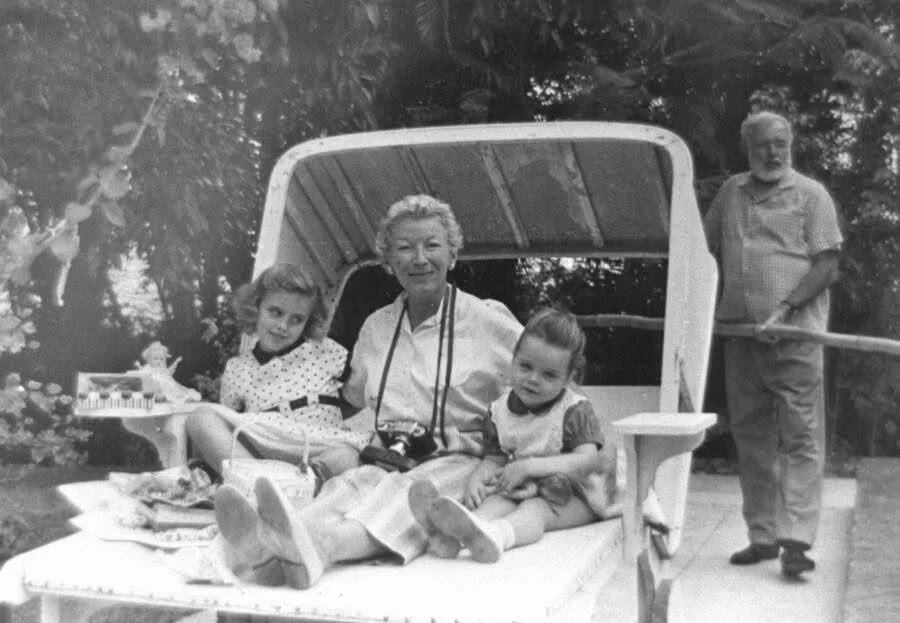
Muffet and Margaux with Ernest Hemingway and grandmother, (background), who died by suicide the year this photo was taken.
Source: Tony Korody/Sygma/Sygma via Getty Images
But the story didn’t start with Ernest (a victim of undiagnosed bipolar disorder). His own father, Clarence, had already done it decades earlier, in 1928, after years of mood swings nobody had a name yet for, suicidal impulses he couldn’t shake, an obsessiveness that ate at everything around him. Insomnia. Migraines that wouldn’t quit. Drinking that stopped being social a long time before anyone admitted it. He couldn’t handle life anymore, and then he shot himself. His siblings couldn’t escape the curse either—a brother who used a gun, and a sister who used pills. So by the time Ernest ever touched a rifle himself, the pattern was already a generation deep. He kept the family curse going.
Fast forward, and the kiss of death kept finding new bodies to devour. Margaux’s younger sister, Muffet, spent years cycling in and out of institutions—a heavy drug user, schizophrenic, and bipolar. As if one diagnoses wasn’t enough for this family, their mother got cancer, and somehow that wasn’t even the thing that killed her. She died of a drug overdose instead. One more name added to a list that already had four suicides before she was through.
And then there’s Mariel—Margaux’s youngest sister who is still alive to tell their story. While everyone else in her bloodline seems to be following their destiny, Mariel has spent years running away from it. She turned her survival into a public mission to break a cycle that had already claimed almost everyone around her. In her memoir, Out Came The Sun, she admits to coping mechanisms that aren’t so far off from her sisters—instead she points them inwards instead of out: obsessive control, strict schedules, rules around food. If she couldn’t manage the insanity in her childhood home, she would grow up to manage everything else. Whereas Margaux’s pain went outward—bulimia, addiction, into a body that eventually gave out.
The Generational Silence
Margaux’s childhood home sat just a short walk from where their grandfather, Ernest, put a shotgun in his mouth. The same house, her sister, Mariel would later go on to say: It was insanity. But no one recognized it as insanity, because recognizing it would have meant acknowledging it, and acknowledging it was the one thing this family refused to do.
Their parents drank every night—not socially, more like routine. And if one of their children ever altered that routine, even a little bit, ‘things became scary.’ Yelling, smashed plates, objects tossed against walls. The home environment was rough and hugely detrimental to the children’s health. No one spoke about their problems, and would tiptoe around on eggshells to avoid any tension. The kids learned early on what the adults already knew: avoidance was survival. Avoidance and isolation became the universal coping mechanism in that house. You wouldn’t think to ask, why did Grandpa die, because the official story for years, inside the family and out, was that Ernest’s death had been an accident. Anything but what it actually was. Jack—Mariel and Margaux’s father, even kept the girls in the dark about their grandfather’s suicide until they were adults. They found out the truth the same way everyone else in the world did—through the media.
Ernest had acted in the same way Jack did, just a generation earlier. Popular for his emotionally-detached prose and hyper-masculinity, he, unfortunately couldn’t bring himself to accept that his father’s issues were down to psychological weakness. He chose to blame his mother rather than sit with the idea that whatever killed his father might already be sitting in him too.
The cycle continued on. Years later, Ernest’s own family went on to suppress his suicide, reporting it to the press as an accidental death. But the facts behind the case and Hemingway’s battle with mental illness quickly spread across the media.
According to interviews, Mariel made it clear that no one in the family ever spoke about anything from those generations. Even her own sister’s death went undiscussed. When Margaux checked herself into Betty Ford Hospital in 1987, during ‘family week’—the one week that let family show up — not one person did.
The generational silence pushed Mariel to make a documentary partly to give people this permission to speak about their own dysfunctions to know they’re not alone. Mariel describes her life in three words: running from crazy. She wake up every morning believing that one day she’s going to end up like the rest of her family. Something is just going to snap, and she’ll be another name added to the suicide list.
Seven people in that family tree eventually died by suicide, and it took a suicide prevention event in 2003 for Mariel to finally say Margaux and suicide in the same sentence—out loud and in public. We can’t say this is a family with bad luck. The silence and the coping mechanisms intertwined with illness and addiction created a domino effect that spanned over decades.
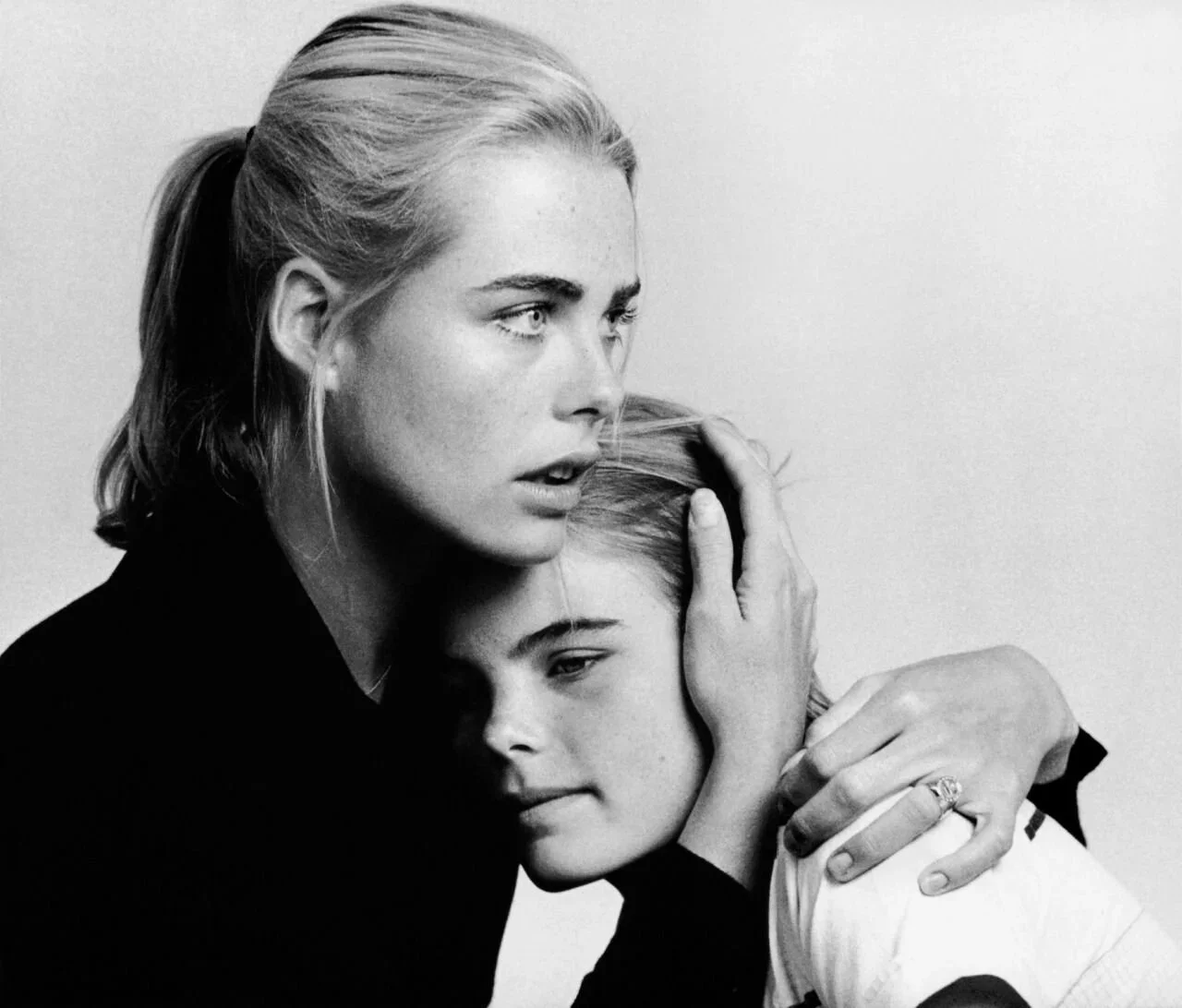
Magraux and Mariel — Source: Alamy
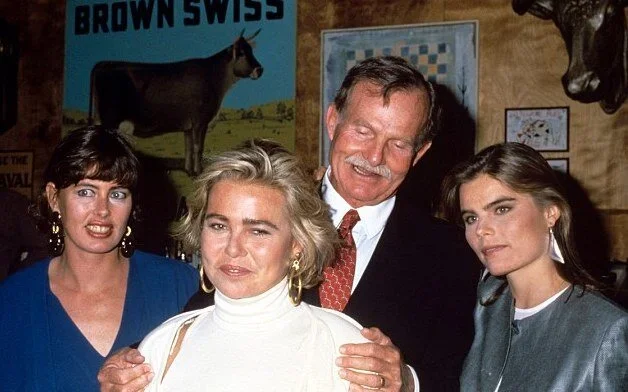
Hemingway Sisters Muffet, Margaux and Mariel with their father Jack — Source: Google Images
A Cry For Help
There's a secret nobody in the family said out loud for decades. In an eerie '90s interview, Margaux alleged that her father had sexually abused her as a child. Her parents denied it, and did what they'd always done best—they cut her off, went silent, let years pass without contact. The allegation sat there, unresolved, for the rest of Margaux's life. She died in ‘96 with her own parents having never taken her word for it. It wasn't until 2013, seventeen years after Margaux was gone, long after anyone could ask her a single follow-up question, that Mariel finally confirmed it was true.
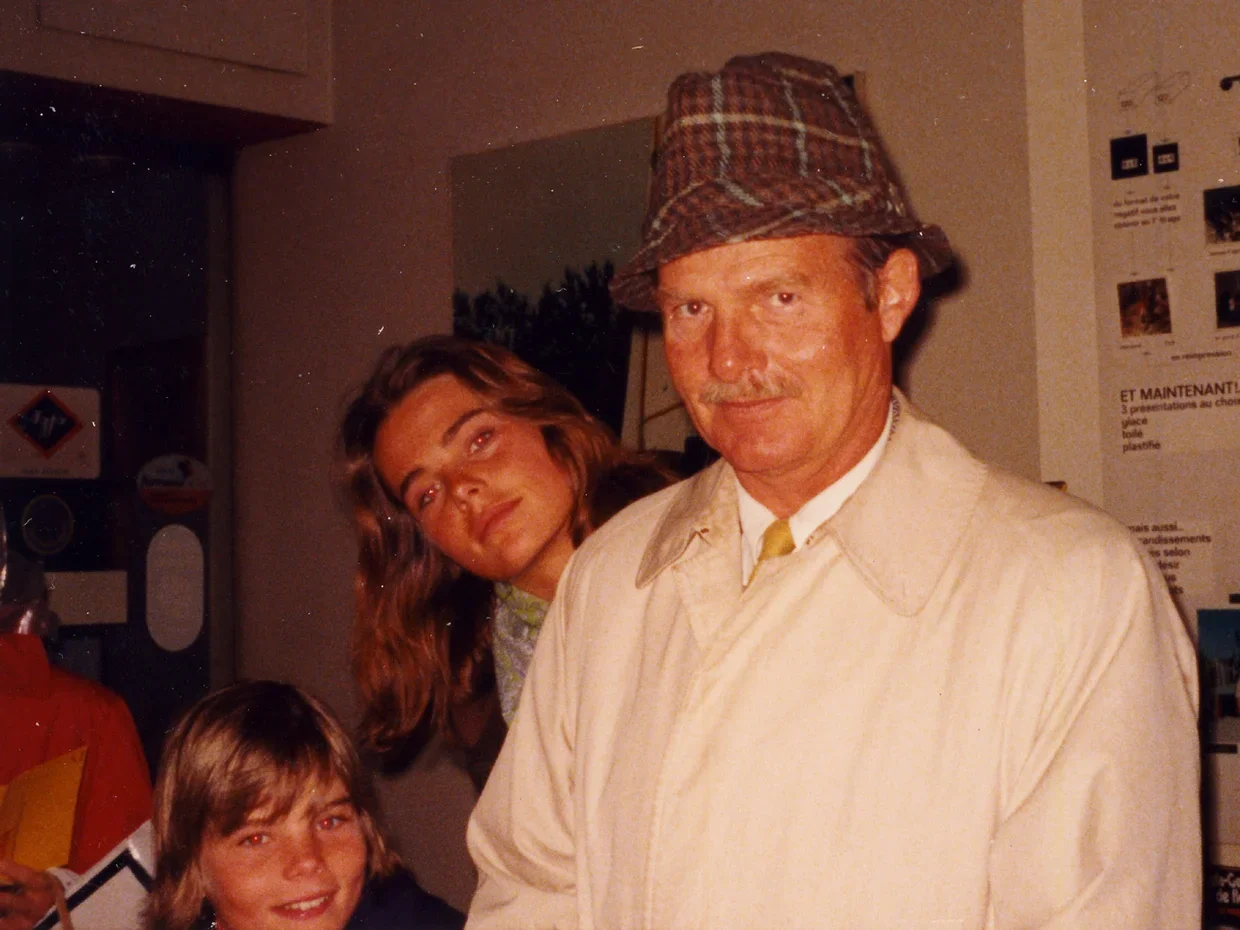
Margaux and her father Jack — Source: CBS News
Margaux’s reality was much more intricate than photoshoots and fancy parties. She grappled with eating disorders, alcoholism, and severe depression.
The same year she died, Margaux sat across from Geraldo, tabloid king of exactly this type of confession, and talked about it all—her bulimia, her drinking, the night at Studio 54 in the ‘70s when she’d had too much, went home, and slit her wrists just to feel something stop. She rolled up her sleeves and showed the scars to the camera, to the studio audience, to whoever was home watching with their young daughters.
But the media continued to exploit her and her ‘big name’. They didn’t even recognize her struggle with addiction or the behavioral patterns of her mental illness. After Geraldo’s show, People magazine still went on to invite her to host a fundraising event at a lavish spa in Miami Beach. During this time, she was diagnosed with manic depression and schizophrenia, on top of dealing with alcoholism, epilepsy, and dyslexia.
Maybe, in a family that had already buried four people to suicide, it was the only way she knew how to ask for help. Regardless, no one watching that broadcast took it as a warning, because after two unsuccessful marriages, a film career of critics ripping her apart, and her time in rehabs, news broke that supermodel Margaux Hemingway died of an intentional overdose at 42 years old.
The night before her death, Margaux’s phone just kept ringing. No one could reach her. On July 1st, a friend, Stabile, went to her apartment. Her Bronco was parked out front, but no one answered the bell. Stabile found a ladder, climbed up, peered through the window—Margaux was lying on her back, completely still. She ran to find two construction workers to help her break into the home.
That weekend had been brutally hot, and her body had already begun to decompose. Margaux lay there, candles around her, still burning, arranged like some kind of shrine. Five days later, on a Saturday, her ashes were buried in Ketchum. It took two months for the coroner’s report to catch up to what everyone already suspected: acute barbiturate intoxication. She’d taken around a hundred tablets; so many that her body hadn’t even had time to digest them all before it stopped. By the amount she took, she wanted to make sure it worked.
Is mental illness in our blood?
Is it fair to call this hereditary? To look at a family’s lineage with that many suicides and just nod, like the shoe fits and that’s it? Or is that the easy way out? Is that the story we tell to sleep better at night—because a curse is more satisfying than the alternative, which is that struggle and suffering doesn’t always need a clean explanation .
The research gives us this formal answer—there’s some genetic component to psychiatric illness, and the research backs it up. But nobody’s found the mechanism. Nobody can point to a gene and tell us that this is the one that makes you pick up a gun and end yourself. People have tried to explain it away—diagnoses of hereditary hemochromatosis (like for Ernest Hemingway), and some have tried to link that condition right into his mental state, as if metabolism alone can account for shooting yourself dead. It’s a theory—but it’s not proof of anything in our DNA.
I believe the "it's genetic" explanation actually does more harm than the comfort it’s supposed to offer. Because if you tell a family their pain and suffering is written into their DNA, you’ve handed every surviving member of that family a life sentence they didn’t ask for. You’ve told Mariel, as a young girl, that she isn’t grieving the death in her family, she has genetic makeup that will turn her into one of them. That’s not a diagnosis. That’s a countdown to something horrific. This doesn’t just weigh on the people already struggling, it’s planting fear into the ones that aren’t; who now have in the back of their minds, watching their behavior for symptoms or patterns, wondering if today is the day their mind starts to deteriorate.
Now take all that and put it on display—run it through your Instagram feed, flood the news outlets—put a famous last name to it—and it stops becoming a private fear, and becomes public speculation. Strangers get to decide whether you’re going to off yourself like the Hemingways based off nothing but a bad mood, a bad week, or a bad day in your life.
Mariel has spoken out about this exact type of tension. In her documentary, she admits to giving away her own power to therapists, to spiritual advisors, to anyone who claimed they could keep her from becoming her sister or grandfather. Her ex-husband has stated: she spent years terrified of the same ‘slippery slope’ that had taken almost everyone in her family. Not because a DNA strand told her to be afraid; because the projection of the media onto her fed her that narrative.
The cost of looking away
Family is meant to be your first line of defense. If someone were to know you’re not okay, it would most likely be your mother or sibling. Unfortunately, for the Hemingways, they turned avoidance into a family tradition. Nobody looked the problem in the eye, nobody pointed a finger at the constant alcohol abuse, but everyone quietly excluded whoever was struggling most, as if mental illness were contagious and silence was the cure. Many households run off this logic. The Hemingways just happened to do it with cameras pointed at them.
That’s the real tragedy underneath the tragedy; a family is supposed to be the people who catch this early, where someone says something before it’s too late. Instead, a toxic home environment not only fails the family member, they actively make the situation worse. Mariel seems to recognize this pattern now—decades too late to save anyone—but she says it outright: enough running from crazy. At some point you have to stop turning away from the monster and face him with strength.
Data says if suicide already runs through your family, your own risk goes up. It’s not a guarantee or a curse, it’s just a stat. A statistic scary enough that a family should build support systems around it. Early intervention is step one. People trained to notice these patterns of mental illness. And yet, time and time again, what actually happens is the person going through the pain isolates and goes dark.
Because fame doesn’t just fail to protect you from mental disorders, it makes everything ten times worse. Every private failure becomes something for the public to feast on. Every relapse becomes a headline. And two sisters, like Margaux and Mariel, split off in opposite directions. Mariel spent her life making better choices, while Margaux leaned into the family name. She told People magazine she wanted to live with the same momentum her grandfather had; his hunting, his bullfights in Pamplona, that same appetite for danger dressed up as passion. Unfortunately, she got the depression and the suicidal thoughts too.
She died the night before the 35th anniversary of his death, which is either the cruelest coincidence imaginable or proof that she'd been quietly following his blueprint the whole time without ever meaning to. Even then, the family's first instinct was denial. Again. Like it always was.
But there’s a bigger truth sitting underneath all of this. An industry that’s never been honest about what it does to the people it uses up. Modeling made Margaux the face of an entire generation, then tossed her out the moment she stopped serving that purpose, which tells you everything about how little ‘being obsessed over’ actually protects a person once the attention shifts elsewhere. Success in that world is rarely stable. There’s always a vulture circling, ready to pick off your flesh the moment you’re exposed. Margaux had raw talent, but her story isn’t an isolated tragedy. It’s a warning the industry has heard a hundred times before but chooses not to listen to.